
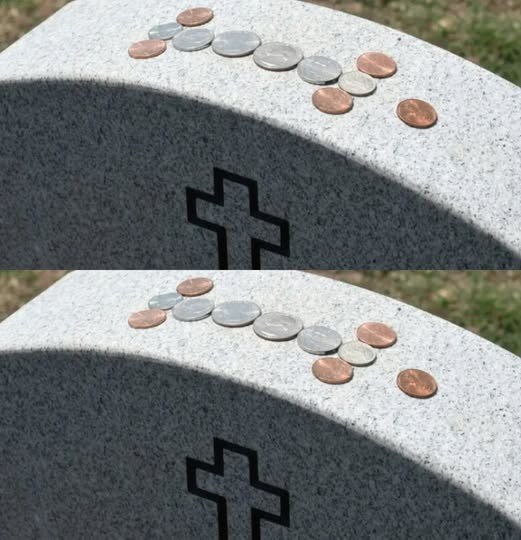
Have you ever walked through a cemetery and noticed a small coin resting on a gravestone?
It may look like ordinary change, but in American military cemeteries, coins are often left as quiet symbols of remembrance and respect.
A commonly shared tradition gives different coins different meanings:
🪙 A Penny — “I visited.”
It can simply mean that someone stopped by to remember and honor the person buried there.




🪙 A Nickel — “We trained together.”
Traditionally, it represents someone who went through boot camp with the deceased.
🪙 A Dime — “We served together.”
It can signify that the visitor served alongside the fallen service member.
🪙 A Quarter — “I was there when you died.”
This is traditionally considered the most personal symbol, indicating that the visitor was present when the service member died.
These meanings are widely associated with the tradition, although practices can vary between families, veterans, and cemeteries.
The coins themselves aren’t valuable because of their monetary worth. Their importance comes from what they represent: someone remembered, someone cared, someone came back.
For grieving families, finding coins on a loved one’s grave can be a powerful reminder that their memory continues beyond the people who knew them personally.
Sometimes there may be several coins on a single gravestone. Each one represents another visitor, another memory, and another silent expression of respect.
So the next time you see a coin resting on a gravestone, don’t simply see loose change.
You may be looking at a tiny message that says:
“You are remembered. You are honored. You are not forgotten.” ❤️